
Cybersecurity in the AI Era: Protecting Data in 2030 and Beyond

Table of Contents
Introduction: The New Cybersecurity Battlefield
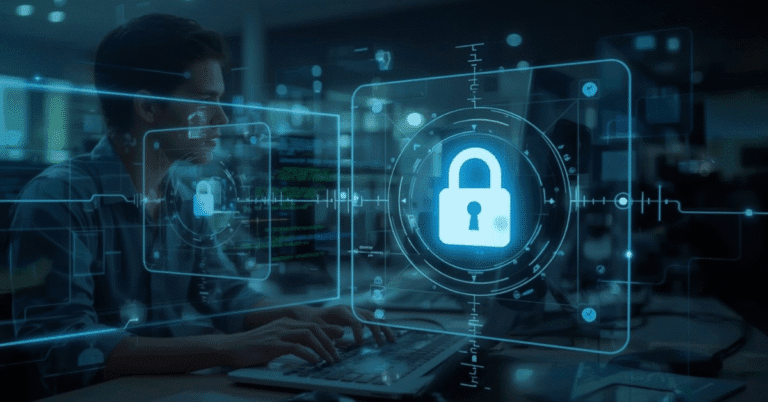
In 2030, cybersecurity will no longer be just about firewalls, antivirus software, or password policies. Artificial Intelligence (AI) is transforming both the attack and defense sides of the equation. Hackers now deploy self-learning AI to bypass traditional defenses, while security experts use AI-powered threat detection systems to predict and neutralize attacks before they happen.
The stakes have never been higher. As quantum computing edges closer to mainstream adoption and billions of IoT devices join the global network, data protection becomes a 24/7 battle.
My Hosting Choice
Need Fast Hosting? I Use Hostinger Business
This site runs on the Business Hosting Plan. It handles high traffic, includes NVMe storage, and makes my pages load instantly.
Get Up to 75% Off Hostinger →⚡ 30-Day Money-Back Guarantee
Key Takeaway: Businesses and individuals that fail to adapt to this AI-driven security landscape risk catastrophic breaches that could compromise personal privacy, corporate secrets, and even national security.
The AI-Driven Threat Landscape in 2030
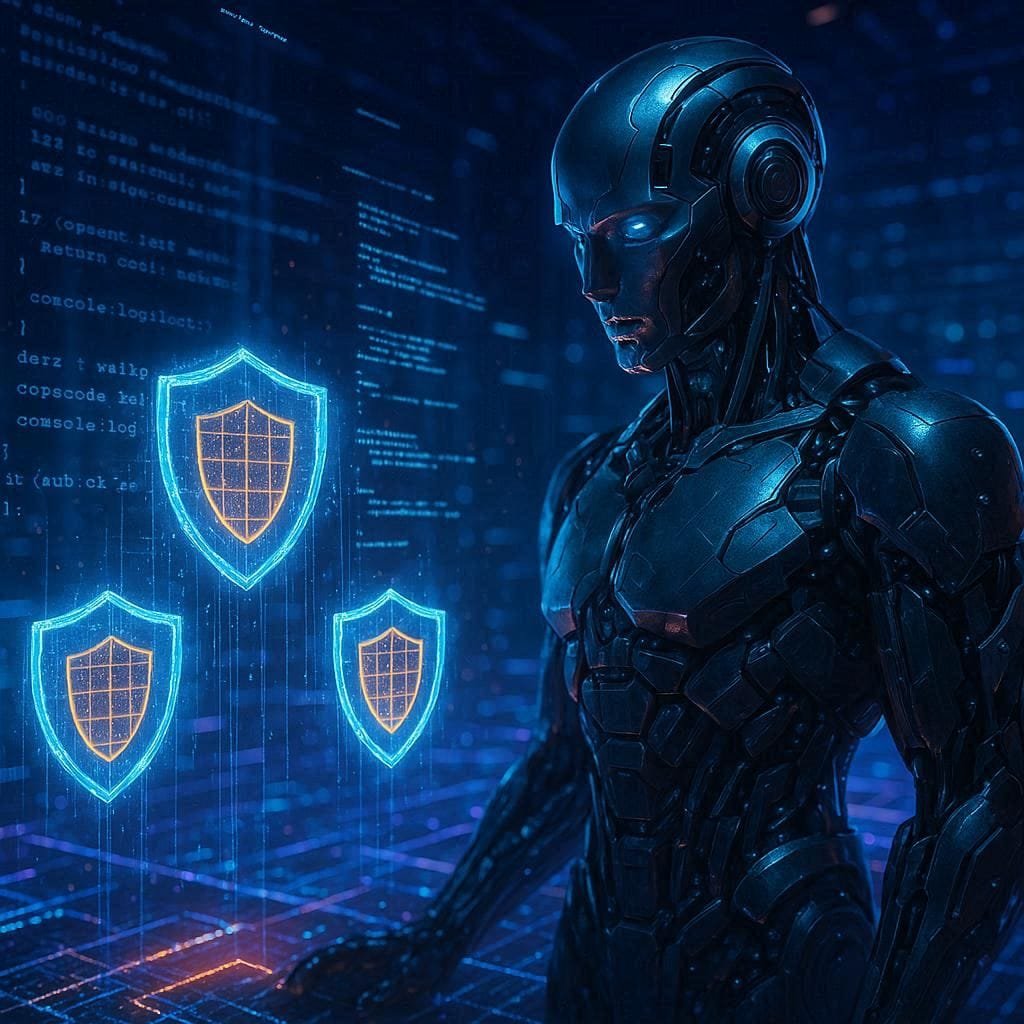
As we move deeper into the AI era, the threat landscape of 2030 will be fundamentally different from what we see today. Cyberattacks will no longer be purely human-led — instead, autonomous AI-powered hacking systems will execute sophisticated attacks at a scale and speed that human defenders can barely match.
These AI-driven threats will include:
- AI-Powered Phishing — Generating hyper-personalized phishing messages using real-time data scraped from social media and IoT devices.
- Autonomous Malware — Self-learning malware capable of adapting its code to bypass security patches automatically.
- Deepfake-Based Attacks — Using AI to impersonate executives, voice patterns, or even biometric data to trick authentication systems.
- Automated Vulnerability Exploitation — AI bots scanning the internet for zero-day vulnerabilities and exploiting them within minutes of discovery.
The arms race between attackers and defenders will evolve into an AI vs. AI battleground, where cyber defense systems will also need to be fully autonomous, predictive, and capable of self-healing. In this future, speed will be the deciding factor — the organization that can detect, analyze, and neutralize a threat within seconds will be the one that survives.
Key Statistics to Watch
- By 2030, 70% of cyberattacks may involve some form of AI-driven automation.
- Real-time threat detection will become a standard, reducing the traditional detection window from weeks to seconds.
- The global AI cybersecurity market is projected to exceed $130 billion by 2030.
The AI-Cybersecurity Convergence: Friend or Foe?
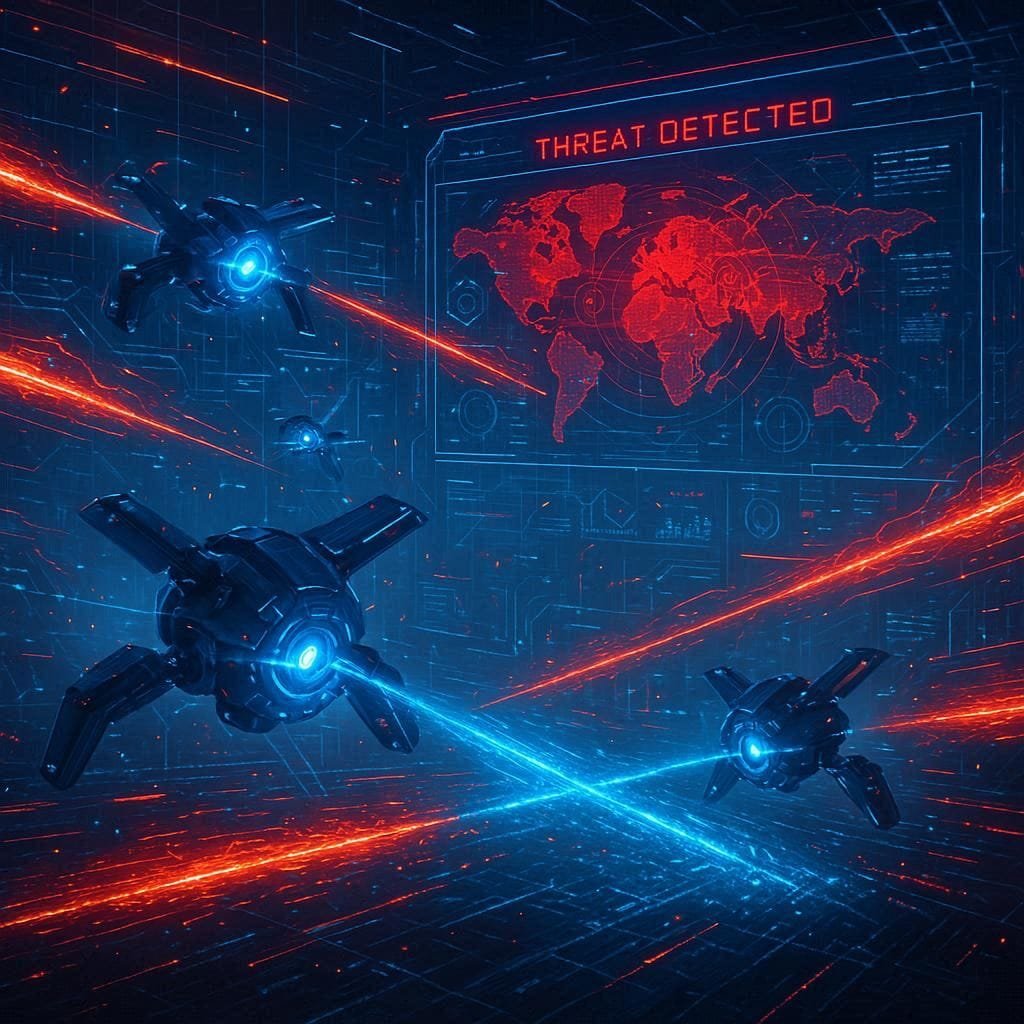
Artificial Intelligence has become both a guardian and a potential threat in the realm of cybersecurity. On one hand, AI-driven systems can analyze massive datasets in real time, identifying vulnerabilities, detecting anomalies, and preventing cyberattacks faster than any human team could. This makes it a powerful ally in protecting sensitive data.
On the other hand, the same AI capabilities can be exploited by cybercriminals. For example:
- Automated Phishing: AI can craft hyper-personalized phishing emails that mimic a victim’s writing style or preferred communication tone.
- Deepfake Threats: AI-generated fake audio and video can be used to impersonate CEOs, spread misinformation, or bypass security checks.
- Malware Evolution: AI can help malware adapt, hide, and evolve in real time, making detection harder.
The challenge in 2030 and beyond will be to leverage AI for protection without allowing malicious actors to outpace security innovations. This means the focus will shift from static defenses to adaptive AI-powered cyber shields capable of learning and countering threats continuously.
See More:🤖 Biggest AI Releases of 2025: What’s Useful, What’s Fluff
Challenges and Risks of Cybersecurity in the AI Era
While AI provides powerful tools for detecting and preventing cyber threats, it also introduces new vulnerabilities that must be addressed. Here are some of the biggest challenges and risks we may face by 2030 and beyond:
1. AI-Powered Cyberattacks
Malicious actors are already experimenting with AI to create more sophisticated phishing campaigns, malware, and deepfake scams. By 2030, these AI-driven attacks could become fully autonomous, capable of adapting to security defenses in real-time.
2. Data Poisoning Attacks
Since AI models rely heavily on large datasets for training, attackers can inject malicious or misleading data into these datasets. This can cause AI systems to make flawed decisions, potentially bypassing security measures.
3. AI Model Theft
AI models are valuable intellectual property. Hackers can steal proprietary models and use them for malicious purposes, such as replicating security algorithms and identifying weaknesses.
4. Ethical & Privacy Concerns
Advanced AI can process and analyze personal data at unprecedented speeds, raising concerns about privacy violations, misuse of biometric data, and intrusive surveillance practices.
5. Regulatory and Compliance Gaps
While technology evolves quickly, laws and regulations often lag behind. By 2030, inadequate cybersecurity legislation for AI-powered systems may leave significant loopholes for exploitation.
we have made a pdf that contains additional information for potential readers, see the pdf below
Useful Links
- Best API Security Platforms for Developers in 2025
- Ethical Data Collection and Privacy by Design: Dev Practices You Need to Implement
- Cyber Hygiene 2025: Small Mistakes That Still Lead to Big Breaches
- End-to-End Encryption for Developers: Best Practices in 2025
- 🛡️ Best Cybersecurity Tools for Freelance Developers in 2025 (Free + Paid)
- Why Every Developer Needs a Certified Ethical Hacker (CEH) Certification in 2025
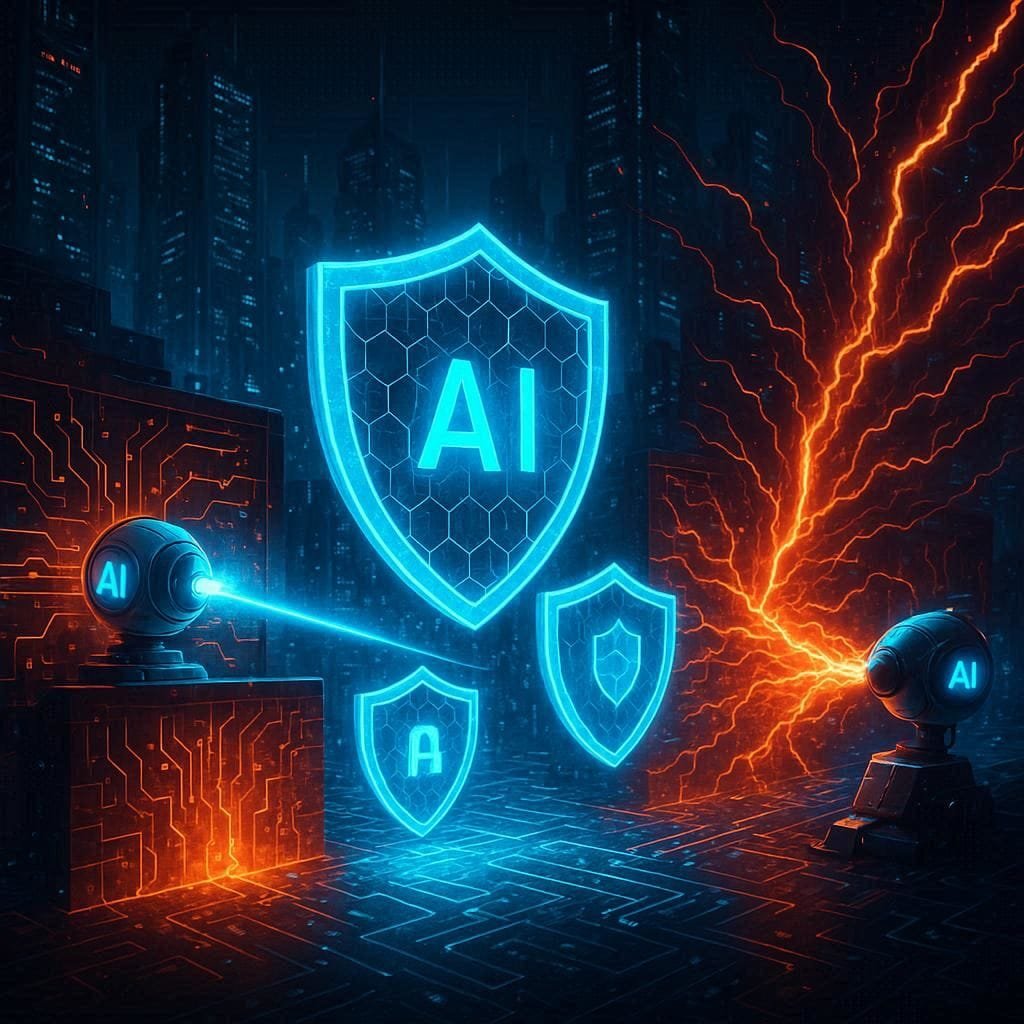
Cybersecurity Best Practices for the AI Era
Protecting data in the age of AI requires going beyond traditional firewalls and antivirus software. As AI tools become more advanced, so do the cyber threats they can generate. In 2030 and beyond, organizations need a layered approach to security that integrates both human oversight and AI-powered defenses.
Here are some key best practices:
- AI-Driven Threat Detection Systems
- Implement AI-based monitoring tools that can detect anomalies in real-time, identify zero-day vulnerabilities, and block suspicious activity before it causes damage.
- Ensure these systems are continuously trained with up-to-date datasets to keep pace with evolving threats.
- Zero Trust Architecture (ZTA)
- Adopt a “never trust, always verify” approach where every user, device, and application must be authenticated before accessing any data or system resource.
- This reduces the risk of breaches caused by compromised internal accounts.
- Regular AI Model Auditing
- As AI systems can be exploited to produce malicious outputs, organizations must periodically audit algorithms for security gaps, bias, or backdoors.
- Data Encryption and Tokenization
- Encrypt data both at rest and in transit using advanced cryptographic standards like AES-256.
- For highly sensitive datasets, implement tokenization to replace actual data with randomized tokens.
- Multi-Factor Authentication (MFA)
- Enforce MFA for all accounts, ensuring that even if passwords are compromised, unauthorized access is still blocked.
- For added security, use biometrics or hardware security keys.
- AI-Powered Security Awareness Training
- Use AI-driven simulations to train employees against phishing attacks, social engineering, and deepfake scams.
- Personalized training ensures staff are aware of the latest threats relevant to their roles.
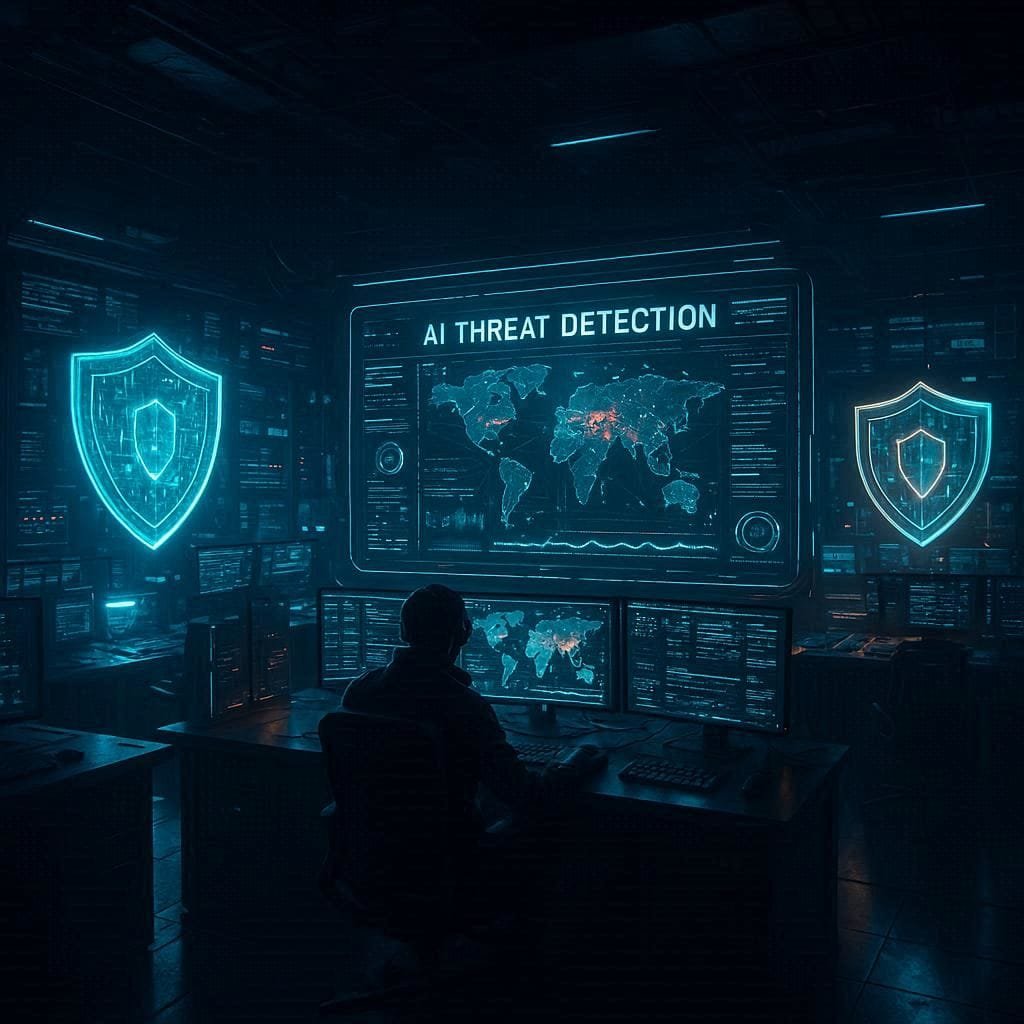
The Future of Cybersecurity in an AI-Driven World
By 2030 and beyond, cybersecurity will be a constant race between attackers and defenders — and AI will be at the center of it. The next decade will likely see both sides leveraging increasingly sophisticated AI models:
- Cybercriminals will deploy AI to automate large-scale phishing campaigns, craft deepfake scams indistinguishable from reality, and discover vulnerabilities faster than traditional hacking methods.
- Defenders will use AI for predictive threat analysis, automated incident response, and self-healing systems that can patch vulnerabilities without human intervention.
Key Future Trends to Expect:
- Self-Learning Cyber Defense Systems
AI systems will become autonomous enough to detect, analyze, and neutralize threats without manual input — much like an immune system for digital infrastructure. - AI-Enhanced Identity Verification
Expect to see biometric authentication combined with behavioral AI analytics that verify users based on typing speed, navigation patterns, and even voice tone. - Quantum-Resistant Encryption
As quantum computing matures, traditional encryption will be vulnerable. The shift toward post-quantum cryptography will become a necessity to safeguard sensitive data. - Global AI Security Alliances
Countries and corporations may form international coalitions to share AI-powered threat intelligence, similar to how global health agencies track and respond to pandemics. - Ethical AI Security Governance
Regulations will emerge to ensure that AI security systems are transparent, fair, and respect privacy rights — preventing an “AI surveillance state” while still maintaining safety.
In short, the battle for digital security will increasingly be AI vs. AI — and the winners will be those who combine cutting-edge technology with strong governance, ethical practices, and global collaboration.
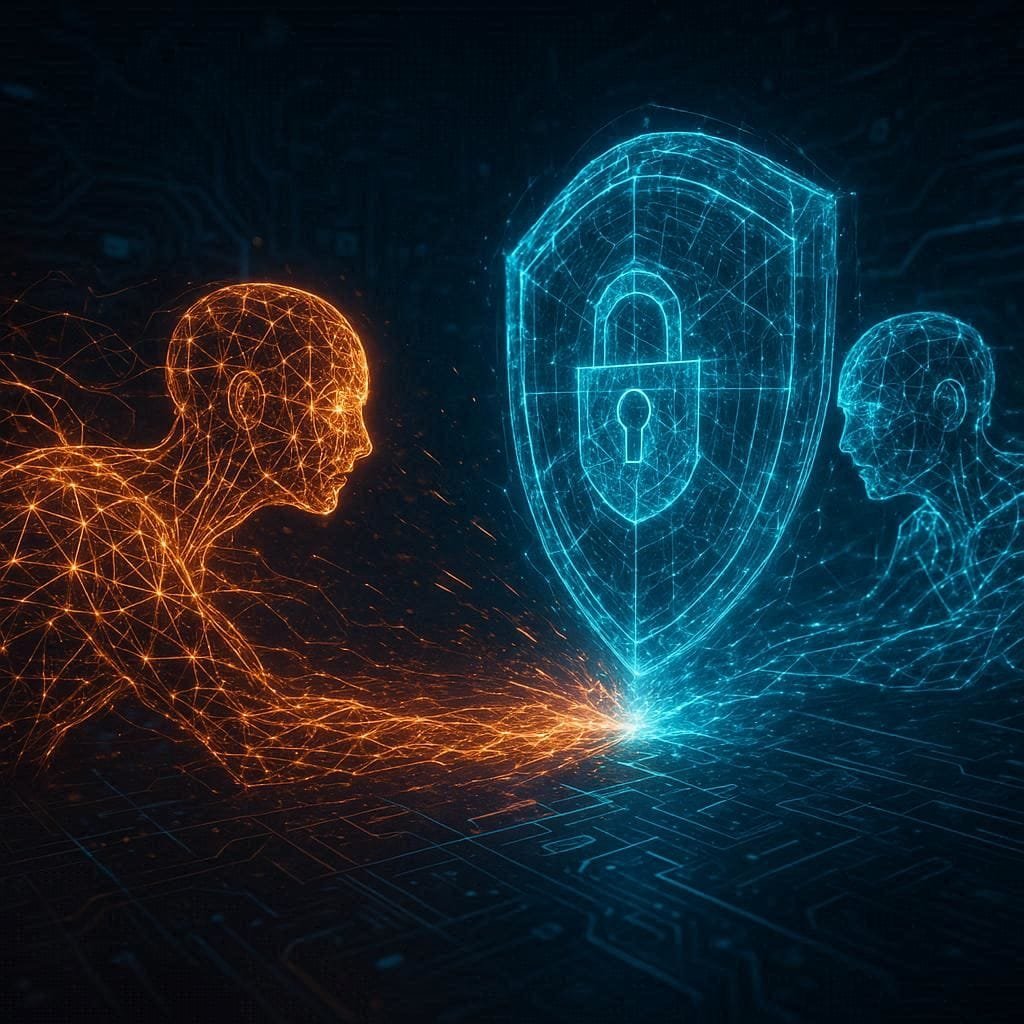
Conclusion: AI as the Shield and the Sword
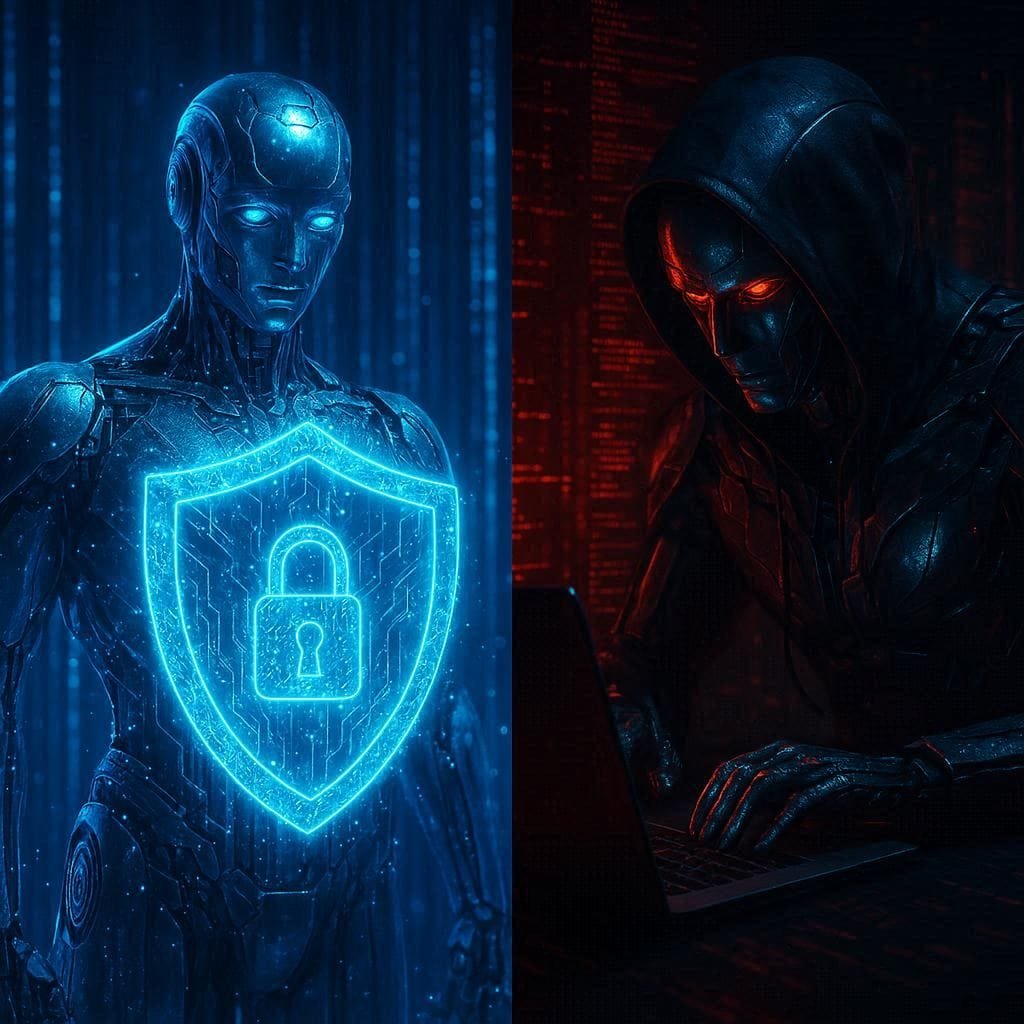
As we move toward 2030 and beyond, AI will be both the greatest tool and the greatest threat in cybersecurity. While cybercriminals will exploit AI for increasingly advanced attacks, defenders will harness it to predict, prevent, and neutralize these threats in real time.
The organizations that thrive will be those that:
- Stay proactive, not reactive.
- Invest in AI-driven security tools and human expertise equally.
- Embrace ethical AI governance to maintain trust while securing systems.
In the AI era, cybersecurity is no longer just a technical challenge — it’s a strategic imperative that requires global cooperation, advanced technology, and a deep understanding of the evolving threat landscape.
FAQs: Cybersecurity in the AI Era
1. How will AI change cybersecurity by 2030?
AI will enable predictive security measures, autonomous threat detection, and self-healing systems, but it will also empower cybercriminals with more sophisticated attack tools.
2. Will AI completely replace human cybersecurity experts?
No. AI will automate many processes, but human oversight, ethical decision-making, and strategic planning will remain critical.
3. What are the biggest cybersecurity threats in the AI era?
Deepfake scams, AI-driven phishing, quantum decryption, and autonomous malware are expected to be top threats.
4. How can organizations prepare for AI-powered cyberattacks?
Invest in AI-driven defense systems, train teams on emerging threats, adopt post-quantum encryption, and follow AI governance best practices.
5. Is quantum computing a real risk to cybersecurity?
Yes. Once mature, quantum computing could break current encryption methods in minutes — making post-quantum cryptography essential.

🚀 Let's Build Something Amazing Together
Hi, I'm Abdul Rehman Khan, founder of Dev Tech Insights & Dark Tech Insights. I specialize in turning ideas into fast, scalable, and modern web solutions. From startups to enterprises, I've helped teams launch products that grow.
- ⚡ Frontend Development (HTML, CSS, JavaScript)
- 📱 MVP Development (from idea to launch)
- 📱 Mobile & Web Apps (React, Next.js, Node.js)
- 📊 Streamlit Dashboards & AI Tools
- 🔍 SEO & Web Performance Optimization
- 🛠️ Custom WordPress & Plugin Development

Abdul Rehman Khan
Articles: 161One comment
Leave a Reply
You must be logged in to post a comment.

[…] The question isn’t whether AI will be part of cybersecurity’s future — it’s whether we’ll be ready when it starts fighting back.If you want more information with Visuals then visit https://admin.devtechinsights.com/cybersecurity-in-the-ai-era-protecting-data-in-2030-and-beyond/ […]